
SEW APPARELS · DEVELOPMENT RESOURCES
Woven Shirt Buying Guides
Woven shirt buying guides help brands connect fabric selection with fit, collar construction and private-label details. Use this resource to prepare a coordinated development brief for formal shirts, casual button-downs or uniform programmes. The linked technical articles examine individual decisions, while the planning sections below explain how to bring those decisions together before sampling and production approval.
Start with the poplin versus Oxford comparison, then review collar interlining, nominated fabric responsibilities, garment-dyed component shades and non-iron claim evidence. Continue with packing, sleeve placket and stitch density decisions. These woven shirt buying guides connect eight focused articles with one coordinated development brief. Visit the custom woven shirt manufacturing page for an enquiry tied to your proposed collection.
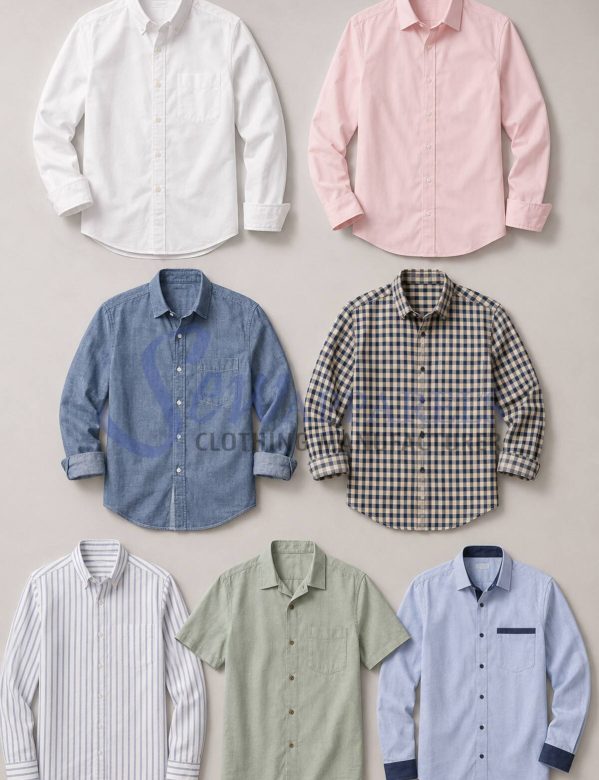
Compare Poplin and Oxford for Your Shirt Programme
Review weave texture, fabric weight, opacity and construction through seven practical checks. Use the buyer decision table and illustrative sample annotations to document which fabric suits the actual shirt requirements.
Read the Poplin Versus Oxford GuideCollar interlining selection: shape and wash stability
Compare interlining weight, bonding and collar shape for woven shirts. Use the technical guide to document sample checks before bulk production.
Read the collar interlining guideWoven Shirt Nominated Fabric Sourcing: Roles and Handover
Clarify brand, mill and factory responsibilities before committing an order. Connect quotation scope, inspection ownership, material release, consumption and replacement decisions in one sourcing brief.
Review nominated fabric sourcingGarment Dyed Woven Shirt Development: Component Shade Checks
Coordinate shell, thread, interlining and button trials before approving the finished shirt. Connect shade references, supported-area comparisons, wash review and controlled substitutions in one release brief.
Review garment dyed shirt developmentWoven Shirt Non Iron Claim Evidence: Appearance and Care
Connect the intended non-iron wording with relevant fabric and finished-shirt evidence. Review laundering conditions, care instructions, sample identity and claim limitations before approving launch text.
Review non iron claim evidenceWoven Shirt Packing Specification: Collar Protection and SKU Control
Coordinate collar supports, folding boards and filled retail bags across the size range. Connect approved barcode proofs with carton assortments and unit reconciliation before releasing bulk packing.
Review woven shirt packing specificationWoven Shirt Sleeve Placket Specification: Drawings and Function
Define the tower, usable opening, gauntlet fastening and cuff junction as one complete sleeve detail. Connect reinforcement, mirrored construction and after-care observations with the approved drawing and sample.
Review sleeve placket specificationWoven Shirt Stitch Density Specification: Units and Seam Maps
Define counting units and operation-specific targets before approving the sewing finish. Connect actual-material trials, appearance references, inspection methods and care observations with a traceable seam worksheet.
Review stitch density specification1. Define the Shirt and Its Intended Use
Begin with the wearer, occasion and intended silhouette. A formal dress shirt, relaxed button-down and staff uniform can share basic components while needing different proportions and finishing decisions. Record the target customer, sample size, wearing context and preferred fit before requesting a quotation. Woven shirt buying guides help turn those starting points into a usable brief. Include front and back sketches, sleeve length, hem shape and pocket requirements so the sample team can understand the whole garment.
Prepare a measurement chart with clearly identified points and an agreed size reference. Note whether the shirt will usually be tucked, worn open or used as an outer layer. Keep comments about shoulder position, body ease and sleeve shape connected to a specific sample version. When a design changes, update the related measurements and drawings together. This makes subsequent sample comments easier to follow and helps prevent an earlier fit reference being mistaken for the approved construction.
2. Select Fabric Using Comparable References
Choose the shell fabric through labelled swatches rather than a weave name alone. Poplin, Oxford, twill, linen blends and stretch woven options can support different collection directions, but the actual composition, weight, colour and finishing need review. Our woven shirt buying guides connect that selection with the finished shirt. Cotton Incorporated’s weaving reference explains the structural differences between plain and Oxford weaves, providing useful background when discussing the proposed material with the technical team.
Record the selected fabric article and retain a physical appearance reference. Review opacity in the intended colour, then assess how the cloth works with the proposed collar and placket. The Proper Cloth shirting reference distinguishes common fabric families and their surface characteristics. Use such descriptions to shortlist options; approve your own sample before committing the order. Record the care expectations alongside the material choice so a later finishing change receives the necessary review.
For patterned styles, use our shirt stripe and check matching guide to set pocket, placket and yoke priorities before cutting. Where the brand nominates a mill, identify who orders the material, inspects rolls and releases fabric for cutting. Keep article identity, usable quantity, colour reference and responsibility records together. Material arrival does not itself confirm acceptance, and a fabric change should reach the pattern, quotation and current sample file.
3. Coordinate Collars, Cuffs and Front Closures
Specify the collar shape, stand, cuff design and front opening as connected parts of the garment. A spread collar, button-down collar or band collar needs a clear reference, while cuff opening and sleeve-placket details should match the intended fit. Woven shirt buying guides encourage brands to approve these features in an assembled sample. Identify the shell, interlining, button and stitch references together so the technical team can reproduce the appearance and function accepted during development. Use our collar interlining selection checklist to compare fused and sew-in support, stiffness and shell compatibility before approval.
Use annotated close-up references to explain a requested change without relying on general comments such as improve finish. Mark the location, describe the expected result and identify the sample version being reviewed. Compare placket alignment, collar symmetry, cuff closure and the way the garment sits when fastened. Keep the accepted component references in the same approval file as the pattern and measurements. A substitute button or interlining should be assessed against that record before it becomes part of bulk production.
4. Organise Samples, Branding and Care Checks
Plan the sample sequence around the decisions that remain open. Identify whether the team needs an initial prototype, fit revision, size-set review or pre-production reference, and record which materials each stage uses. Woven shirt buying guides are most useful when they help brands distinguish a development sample from a final approval. Agree relevant measurement and after-care checks, keep the evidence with the sample record and make the responsibility for accepting changes clear to the people managing the order.
Distinguish an untreated fabric review from garment-dyed component shade approval and any non-iron appearance claim. Record the actual care conditions, construction version and limitations of the evidence obtained. Keep unsupported wording out of launch copy until the responsible team has reviewed the complete shirt.
Prepare logo artwork, label text, care information, packaging requirements and trim references before final approval. Embroidery position should be reviewed on the proposed shirt construction, while labels and hang tags need their own content and placement checks. Confirm that revised artwork has replaced earlier versions in the development file. Keep unresolved fit or material comments visible rather than letting an approved logo sample imply that the complete shirt is ready. The final reference should connect garment construction, branding and packing instructions in one consistent record.
5. Low MOQ Woven Shirt Manufacturer Planning
When evaluating a low MOQ woven shirt manufacturer, identify the fabric route and quantity for each colour and style. Ask Sew Apparels to confirm the applicable minimum in a written project quotation after reviewing fabric, trims, size breakdown and development scope. Stock fabric, nominated material and custom fabric development can require different arrangements; do not assume they share one minimum. These woven shirt buying guides help startup teams prepare a focused enquiry, compare feasible options and document what is included before committing a collection.
6. Development Support for Startup Shirt Brands
Startup brands can begin with a clear shirt concept, reference fit, fabric preference and realistic quantity plan. Explain which technical inputs are ready and where you need support with sampling, custom collars, private labels or packaging. Woven shirt buying guides provide a practical structure for that first discussion. Confirm the development scope, costs, responsibilities and proposed schedule directly with Sew Apparels. A focused launch brief can still include the essential approval decisions, helping a new brand move from initial references to a clearly documented production request.
Turn Your Shirt Concept into a Development Brief
Bring together the fabric reference and sourcing responsibilities, fit chart, collar and placket details, stitch requirements, care evidence, branding and packing plan. Use these woven shirt buying guides to prepare a focused enquiry, close outstanding sample decisions and discuss the next development steps with Sew Apparels.
Discuss Woven Shirt Manufacturing