
Woven shirt sleeve placket specification turns a small but important shirt detail into a clear development instruction. The opening must work with the cuff, fasten as intended and look consistent on both sleeves. A photograph labelled “standard placket” rarely explains enough about shape, dimensions, overlap and reinforcement for a reliable approval.
This guide explains six checks for a woven shirt sleeve placket specification. It helps buyers prepare drawings, review a representative assembly and close sample comments before production release. Actual dimensions, stitch details and assessment limits should be agreed for the fabric, cuff design, size range and intended use.
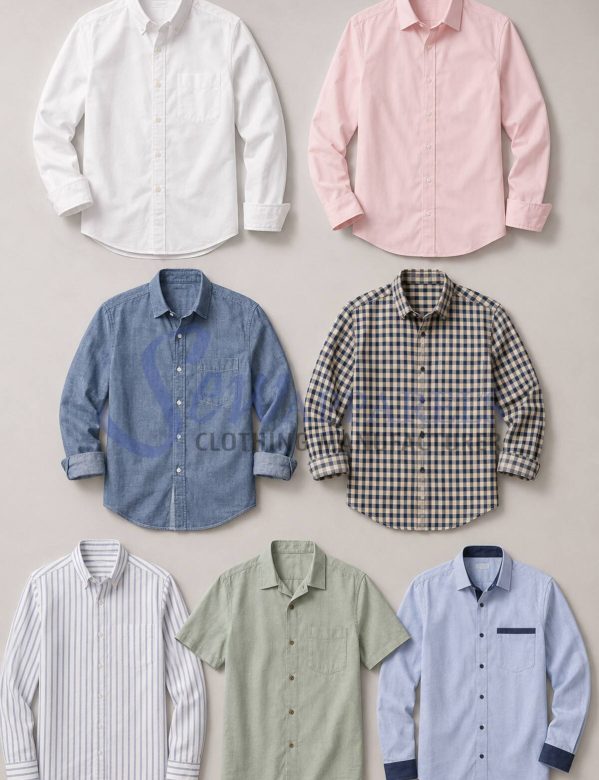
1. Define the woven shirt sleeve placket specification in drawings
Start with the intended appearance and construction type. Identify the outer overlap, inner underlap, tower shape and relationship to the cuff. Show the detail opened and closed where necessary. A clear drawing should distinguish a visible design feature from a construction line that will be concealed in the finished shirt.
A shirt placket tower shape drawing should describe the top outline and the stitch path around it. Mark the reference points used for measurements and note whether values refer to the pattern piece or finished construction. Mixing these conventions can cause a correctly cut piece to be judged against an unrelated finished dimension.
Use construction references as references
Shirtmaker Pam Erny’s sleeve-placket tutorial illustrates a two-piece overlap and underlap method and notes that other methods exist. It is useful background for understanding the assembly. Its example is not a universal factory specification, so the buyer and technical team should approve their own construction and dimensions.
The shirt sleeve placket drawing approval should identify the drawing version, material reference, size basis and unresolved decisions. If a sample changes the intended shape, update the drawing or reject the deviation explicitly. Keeping a contradictory drawing and sample both marked approved creates uncertainty for the next reviewer.
2. Specify the tower and usable opening together
Shirt sleeve tower placket dimensions should identify the finished width, length and other features needed to communicate the design. State how each measurement is taken, including the relevant start and end points. Add agreed tolerances through the product specification rather than assuming an unrecorded workshop convention.
The shirt sleeve opening length spec should distinguish the construction slit from the usable opening after assembly. The overlap, reinforcement and cuff attachment affect how the wearer accesses the sleeve. A longer visible tower does not automatically provide the intended usable opening, so verify function on the completed sample.
Check the relationship with the sleeve
Consider the sleeve width, cuff opening, pleats or gathers and intended silhouette together. A formal shirt and a relaxed casual shirt may need different detail decisions. In the woven shirt sleeve placket specification, describe what the wearer should be able to do rather than selecting a dimension solely because it resembles another brand’s shirt.
Review representative sizes chosen with the technical team. The approved sample size may not reveal every issue in a wider size range or a changed sleeve proportion. Keep the basis of the review clear, and record whether the same detail applies throughout the range or whether a defined variation requires its own approval. Carry the approved cuff and sleeve arrangement into the shirt packing specification when deciding fold and cuff presentation.
3. Position the gauntlet button and verify operation
Woven shirt gauntlet button placement should specify the position relative to clearly identified finished reference points. Show its relationship to the overlap and usable opening. Confirm whether the design includes a button at all, because a missing feature and an intentionally unbuttoned design are different approval decisions.
Shirt gauntlet buttonhole direction should be stated on the drawing together with the buttonhole position and relevant finished size. Identify the proposed button and buttonhole references. Do not assume that a familiar button size will work equally well when the fabric, reinforcement or folded thickness changes.
Try the complete fastening
Shirt sleeve fastening operation should be reviewed on the assembled sleeve and cuff. Open and close the intended fastenings, examine the overlap when secured and check whether the button passes through the buttonhole as expected. Describe any resistance, distortion or unintended gaping with the sample identity and location.
Check that the fastening arrangement suits the intended wearing and handling context. If rolling the sleeve is part of the design brief, assess that use explicitly without treating it as an automatic requirement for every shirt. Changes to the button, buttonhole or opening should be reviewed together in the woven shirt sleeve placket specification.
4. Approve the cuff junction and inner finish
The shirt cuff placket junction is where the sleeve opening and cuff attachment meet. Show the expected alignment, overlap and finished edge in a close-up drawing or sample reference. Inspect both the outer appearance and the inside, since a neat exterior can hide an awkward or unfinished internal junction.
A shirt cuff opening junction review should examine how the cuff ends relate to the placket when opened and fastened. Check that assembly does not create unwanted bulk or pull the sleeve off its intended position. Record whether a problem relates to dimensions, folding, seam alignment or another observed feature before requesting correction.
Review what touches the wearer
The shirt sleeve placket inner finish should identify how raw edges and allowances are enclosed or otherwise finished. Check for loose threads, exposed edges, unnecessary bulk and a rough contact point. The technical team should assess the chosen construction with the actual material rather than substituting a generic finishing instruction.
For the woven shirt sleeve placket specification, preserve an inside-view reference as well as the outside appearance. A changed assembly method may alter the inner finish even if the tower outline appears similar. Keep the accepted construction, thread reference and relevant support details together so an appearance approval does not silently authorise an unreviewed internal change.
5. Review reinforcement, symmetry and after-care appearance
Shirt sleeve opening reinforcement should be specified at the locations the technical team identifies as needing support. Show the intended construction and placement clearly. Extra stitching is not automatically better: assess whether the selected arrangement supports the opening without creating unwanted stiffness, distortion or damage to the proposed fabric.
Shirt sleeve placket end reinforcement should have a defined reference and review scope. Check the assembled end for an orderly stitch path and appropriate handling under the agreed assessment. Do not invent a universal force requirement or number of operating cycles; establish any performance evaluation with the buyer and relevant technical adviser.
Compare both sleeves
Shirt left right placket symmetry should mean the intended mirrored arrangement, not two copies accidentally facing the same direction. Compare placement, tower shape, overlap, button position and cuff junction using the defined references. Review the garment as a pair, since checking isolated details can miss an obvious difference when the shirt is worn.
A shirt placket after care check should use the agreed care or evaluation route and record the sample condition. Inspect smoothness, opening shape, fastening and inner finish after the relevant stage. Keep observations connected to the approved material and assembly so later changes receive appropriate review.
Coats’ seam-puckering bulletin explains that thread tension, fabric structure, component dimensional change and feeding can contribute to puckering. That background supports investigating the cause of a distorted placket. It does not justify a universal machine setting or prove that changing one thread will solve every shirt assembly problem.
6. Close sample comments and release the current detail
A woven shirt sleeve placket sample review should connect observations to specific drawing points and sample versions. Mark what is accepted, what must change and who owns the correction. General comments such as “improve placket” leave the technical team to guess whether the buyer means shape, dimensions, operation or finishing.
For a woven shirt sleeve placket specification, retain the revised drawing, approved sample, measurement record, component references and any relevant after-care observations. If approval is conditional, state the remaining condition and closure requirement. An accepted tower shape should not imply that an unresolved buttonhole or cuff junction has also been released.
Prepare the sourcing handover
For custom woven shirt manufacturing, provide the placket drawing alongside sleeve, cuff and fabric information. Explain the target size range and any design variation. Ask which development and assessment steps are included in the quotation, and discuss revisions before treating an initial sample price as coverage for unlimited construction changes.
For private label woven shirt production, keep the sleeve detail consistent with the wider fit, branding and care brief. Buyers can use the woven shirt manufacturing page to prepare an enquiry with specific references. Actual availability, minimum quantities and commercial terms require confirmation for the proposed order.
Frequently asked questions
Can a photograph replace the detail drawing?
A photograph helps communicate appearance, but a woven shirt sleeve placket specification should also define measurement references, construction and fastening decisions. Use the photograph and drawing together, and ensure they refer to the same approved version rather than conflicting examples.
Should all sleeve plackets have the same dimensions?
No universal dimension is prescribed here. The opening, tower, cuff and sleeve proportion need to work together for the actual design. Set the required finished dimensions and tolerances through the agreed technical specification, then check the assembled result.
Can a startup brand prepare this brief?
A startup can begin with a clear design reference and identify the technical decisions that still need support. A focused sample review can clarify them before release. This does not establish a fixed minimum order quantity or guarantee every proposed construction is available.
What happens when the sleeve detail changes?
Update the drawing and review its effect on dimensions, cuff alignment, fastening and finishing. The woven shirt buying guides connect this detail with other development and sourcing decisions. A traceable woven shirt sleeve placket specification keeps the accepted version clear for the next order.