
Corporate uniform laundry route selection should happen before a buyer approves fabric, decoration and bulk quantities. A shirt that performs acceptably in a domestic wash may face different conditions in a managed laundry service. The chosen route also affects collection, garment identification, employee instructions, replacement stock and the practical responsibilities of the employer and laundry provider.
Start with the actual garments and the intended care process, rather than choosing a route from a fabric name alone. Office shirts, trousers, knit polos and tailored reception pieces may not share one suitable treatment. These six checks help buyers compare routes, request useful evidence and document the approved arrangement without confusing garment care with an unverified hygiene or protective-performance claim.
1. Define corporate uniform laundry route selection by garment
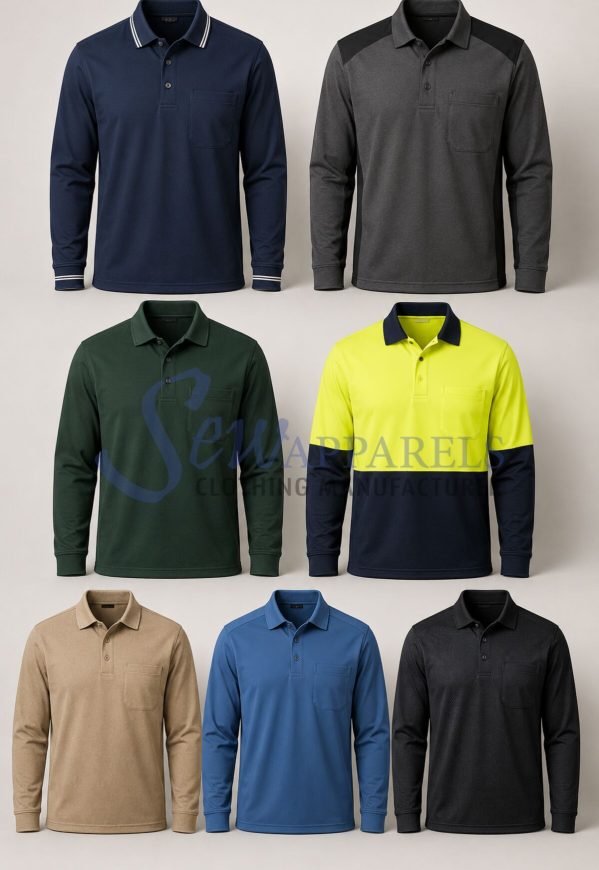
A corporate uniform care route matrix should list each style, material, colour, decoration, trim and approved version. Identify the proposed washing, drying and finishing route alongside the person responsible for it. Record any garment that requires separate handling, especially when a uniform set contains different constructions.
The uniform home wash versus rental laundry decision involves more than where a washing machine sits. A rental programme may include garment ownership, collection, repair and replacement services. A managed laundry provider may instead process garments that the employer owns. Confirm the actual service scope before comparing it with an employee washing arrangement.
For corporate uniform mixed garment care routes, establish how incompatible items will be separated and returned. A delicate lining, heat-sensitive print or contrasting trim may restrict treatment even if the main fabric appears robust. Avoid assigning a complete wardrobe to one route without reviewing those components.
Corporate uniform laundry route selection should also consider issue quantities and turnaround. Employees need suitable garments while items are away for cleaning. Calculate the operational stock requirement from the agreed collection and return schedule, wearer needs and replacement arrangements. Do not assume a universal number of sets will suit every workplace.
2. Confirm the intended process before specifying materials
A corporate uniform rental laundry garment brief should explain the provider’s proposed processing conditions and any construction restrictions. Ask which fabrics, trims, closures, prints and identification methods the provider accepts. Establish whether the process includes tumble drying, tunnel finishing, pressing or other treatments relevant to the garment.
Corporate uniform laundry provider sample requirements should identify the finished styles needed for assessment. Provide representative decoration and trims, not an undecorated fabric swatch if the final garment will carry embroidery or a transfer print. Include the care information and material references that relate to the actual approved version.
Use corporate uniform laundry route selection to inform discussions about corporate uniform manufacturing in Bangladesh. Explain the intended care route at quotation and sampling stages so the supplier can flag incompatibilities. A late change from domestic washing to intensive industrial processing may require new material or component approvals.
For custom corporate uniform manufacturing, request clarity on the evidence available and the evidence still required. A supplier’s description of a fabric as washable does not establish compatibility with every provider’s process. Agree what will be assessed, who arranges the assessment and which results are needed before production release.
3. Distinguish a laboratory procedure from an operating approval
A uniform laundry compatibility trial should reflect the properties that matter to the buyer, such as dimensional change, colour appearance, seam condition and decoration integrity. Define the procedure, number of cycles, assessment points and acceptance criteria with the relevant technical parties. Record an unwashed baseline and use consistent measurement methods.
ISO 15797:2017 describes procedures for evaluating workwear intended for industrial laundering, including changes in dimensions and appearance. It simulates industrial conditions rather than instructing laundry operators how to run their facilities. ISO notes that assessment in the actual intended equipment and process can be appropriate when determining compatibility.
Corporate uniform laundry route selection therefore needs the chosen test procedure to be relevant to the proposed service. A report should identify the garment, process and results reviewed. It does not automatically cover another fabric, decoration system or finishing route, and it should not be presented as a blanket supplier certification.
Corporate uniform workwear wash process approval should document the agreed route and any limits or unresolved issues. Do not claim disinfection, infection control or protective performance from a visual laundering trial alone. If the work setting has specific contamination or safety requirements, the responsible employer and qualified specialists need to establish the appropriate programme and supporting evidence.
4. Assess the complete garment range in a managed pilot
A corporate uniform managed laundry pilot can reveal practical issues that a swatch comparison misses. Include representative finished garments, relevant sizes and the decoration and trim combinations that may be vulnerable. Record the intended process and distinguish observed results from assumptions about long-term service life.
Corporate uniform whole range care compatibility requires a style-by-style review. A successful shirt assessment does not approve a tailored jacket, stretch trouser or knit polo. Similar base fabrics may behave differently when combined with interlinings, seams, labels or prints. Track which versions have actually been assessed and which remain outside the approval.
For corporate uniform laundry route selection, inspect fit-related dimensions, visible shade change, surface appearance, closure operation, puckering and artwork condition at agreed points. Use clear photographs and measurements for comparison. Separate a cosmetic preference from a functional defect, and agree how each affects acceptance.
The illustrative pilot matrix below is a documentation example, not Sew Apparels test data or a prescribed pass/fail standard. The buyer, supplier and provider should define appropriate evidence and criteria for their own garments and use conditions.
| Garment feature | Evidence to record | Decision before release |
|---|---|---|
| Shirt dimensions | Baseline and post-process measurements | Changes within agreed specification |
| Contrasting panels | Shade and transfer observations | Appearance acceptable under agreed review |
| Printed branding | Surface and adhesion condition | Decoration compatible with selected route |
| Closures and trims | Operation and visible condition | Required function retained |
| Garment identification | Readability and receiving checks | Items remain traceable through service |
When a pilot identifies a problem, record the corrective proposal and repeat the relevant assessment before approval. A changed print adhesive or trim is a new variable. Use the repeat-order specification to retain the original result and explain the change, instead of replacing the file with an unexplained “passed” summary.
5. Set care information and employee responsibilities clearly
Employee uniform care responsibility should state who cleans the garments, where instructions are available and how damage or missing information is reported. A corporate uniform employee washing decision needs practical communication. Employees should not be expected to infer suitable settings from a fabric composition label or copy another garment’s care method.
Corporate uniform institutional purchase care labels require market-specific review. The FTC’s U.S. Care Labeling Rule guidance identifies an exemption for products sold to institutional buyers for commercial use, including certain employer-purchased uniforms. It distinguishes these from uniforms purchased by employees. This is not a worldwide exemption or evidence that a garment needs no practical care instructions.
For private label corporate uniform production, agree the care information, language, placement and final artwork before manufacture. Check the applicable destination requirements and the way the goods are sold or issued. Even where a particular labeling exemption applies, a written care specification can remain important for employees and service providers.
Corporate uniform laundry route selection should connect the approved process with the information supplied to the people who use it. A domestic-care label should not be treated as permission for any industrial treatment. If the care route changes, reassess the garment evidence and instructions instead of silently carrying forward the old approval.
6. Compare service costs, ownership and release conditions
For corporate uniform laundry route selection, a corporate uniform care route comparison should account for cleaning, transport, sorting, repair, stock availability and replacement arrangements. Compare the same garment scope and service period. A price per wash may omit collection or loss charges, while a rental price may include services that an owned-garment programme handles separately.
Corporate uniform commercial laundry responsibility should define collection points, receiving records, turnaround expectations and how exceptions are handled. Record who approves repairs and how an unreturned or damaged item is investigated. Avoid assuming the provider will manage every garment issue simply because laundering is outsourced.
In a corporate uniform ownership and care agreement, distinguish ownership from processing responsibility. State whether the employer, employee or rental service owns the garments and who maintains the issue records. Use clear ordinary language in the agreement, with a consistent garment identifier connecting stock, care and replacement records.
Release corporate uniform laundry route selection only after the relevant garments, process and responsibilities are approved. Identify which versions and routes are covered. Keep unresolved styles out of the blanket approval until their own assessment is complete. A programme can use more than one route when the operational arrangements are clear.
Startup businesses can begin with a limited, well-defined uniform range and discuss sampling and order quantities with the supplier. Low minimum quantities and service availability depend on the actual garments and provider. Confirm the terms for the programme rather than promising that every startup order can use the same laundry arrangement.
Common laundry route questions
Does industrial laundering always mean better garment care?
No. The process must suit the garment and the workplace requirements. Controlled service arrangements can support consistent handling, but incompatible materials or decoration can still be damaged. Compare the actual process and evidence rather than ranking routes by their names.
Can one approved fabric report cover the entire uniform range?
Not automatically. Garment construction, trims and decoration introduce additional variables. Define the scope of the report and assess the relevant finished combinations before treating the range as approved.
Can an approved route be changed without a new review?
A materially different process should trigger a compatibility review. Record the proposed change, assess the affected garments and update the instructions and responsibility records as needed. Preserve the previous approval for traceability.
Build care compatibility into the purchasing brief
Use the corporate uniform buying guides to connect care decisions with garment versions, quantities and replenishment planning. Supply the intended care process, representative sample requirements and approval responsibilities when requesting development or a quotation.
Corporate uniform laundry route selection works best when technical evidence and day-to-day handling support the same decision. A documented matrix, relevant compatibility assessment and clear service agreement make the approved programme easier to operate and review as garments and providers change.